
2025 Annual Report

Advancing health and well-being for all communities
Founded in 1983 and based in Seattle, Kaiser Permanente Washington Health Research Institute (KPWHRI) is 1 of 8 research centers located in each Kaiser Permanente regional market. In 2025, KPWHRI was awarded $49.6 million in external grant funding to lead research that improves care for Kaiser Permanente members as well as the broader community and helps millions of people worldwide lead healthier, happier lives.
Research highlights
In 2025, KPWHRI researchers contributed significant findings in many key areas of research, with more than 250 articles published in peer-reviewed journals. Much of our research also received attention from the media. Here are some of our research highlights from 2025:
Mailed HPV test kits cost-effective for screening
KPWHRI researchers found strong economic justification for mailing patients an at-home human papillomavirus (HPV) screening kit. Previous KPWHRI research had found that mailed kits significantly increased cervical cancer screening rates, and this latest research showed that mailed kits are cost-effective for screening across different patient groups, including those who are up to date on screening or overdue.
In the media: Direct-mail HPV self-test kits boost screening rates and are cost-effective, HealthDay, Oct. 8
Acupuncture effective for low back pain in older adults
KPWHRI researchers co-led the first large-scale randomized controlled trial on acupuncture for adults ages 65 and older with chronic low back pain. After 6 and 12 months of follow-up, study participants who added acupuncture to their usual care had greater improvements in their pain-related physical limitations than those who had usual care alone. Participants also reported few adverse effects from acupuncture, confirming that this is a low-risk option for older adults — an age group that has a higher risk of side effects from pain medications and other common treatments for chronic back pain.
In the media: Study links acupuncture to back-pain relief, Good Morning America, Sept. 15
Helping first-time screeners know when to return for lung cancer screening
KPWHRI research suggests that well-timed outreach with patient-centered materials can boost awareness about repeat lung cancer screening and when to get it. The researchers collaborated with a patient advisory board and with primary care physicians and leaders to understand the challenges and barriers to lung cancer screening. These partnerships produced a communication intervention for people who had recently had screening, combining print materials with a “patient voices” video. In a randomized controlled trial evaluating the impact of this intervention, the researchers found that first-time screeners were particularly likely to benefit: Those who’d received the intervention were 35% more likely to know to return in a year for their next screening.
Remote programs effective for chronic pain
Cognitive behavioral therapy (CBT) is an effective nondrug treatment for people with chronic pain, but it can be expensive and isn’t always available — especially in rural areas. A randomized clinical trial co-led by KPWHRI found that CBT delivered remotely — via telehealth or an online program — is also effective. After 3 months, study participants having either type of remote CBT were significantly more likely to have a 30% or greater improvement in pain severity than those having routine care plus a mailed resource guide. The benefits were sustained over 12 months of follow-up.
Using analytics to prevent adverse COVID-19 outcomes
A paper published in 2025 examined a COVID-19 risk prediction model developed by the advanced analytics team at KPWHRI’s Center for Accelerating Care Transformation (ACT Center). This model helps Kaiser Permanente Washington care teams quickly and accurately identify patients at high risk of adverse COVID-19 outcomes, ensuring that Paxlovid and other potentially lifesaving medications are offered within the short window of time when treatment is effective. Thanks to this model, Kaiser Permanente Washington has had this capability since 2023. The recent paper shares a closer look at the model and how it was developed in hopes that other health systems can use these results to benefit patients nationwide.
Evaluating telehealth: Progress, challenges, and road ahead
In partnership with the California Health Care Foundation, KPWHRI’s Center for Community Health and Evaluation (CCHE) published a report analyzing California’s decades-long journey with telehealth. This comprehensive assessment provides actionable steps for key partners — including policymakers, health plans, health system leaders, providers, and researchers — to ensure that telehealth works for everyone, especially those who face the greatest barriers to care. Since 2020, CCHE’s evaluations have provided insights into what makes telehealth work in California’s safety net — such as dedicated resources to make operational changes, adoption of patient-friendly technology, and support for patients who experience digital barriers.
More media highlights
KPWHRI’s research findings reached audiences nationwide through more than 40 news stories in 2025, including the select media mentions above. Here are some additional studies that made headlines:
- Remote BP monitoring and drug titration — Does it work? How do we do it? Medical Digest & Congress Report, Dec. 3
- Childhood blood cancers linked to radiation from medical imaging scans, U.S. News & World Report, Sept. 22
- Anticholinergics tied to physical performance decline in older adults, HealthDay, July 16
- Suicides and attempts fall in health systems implementing the ‘Zero Suicide Model,’ study finds, Associated Press, April 7
- Major gaps in electronic health records challenge alcohol-related care in primary care, AHRQ News Now, Feb. 18
Finances
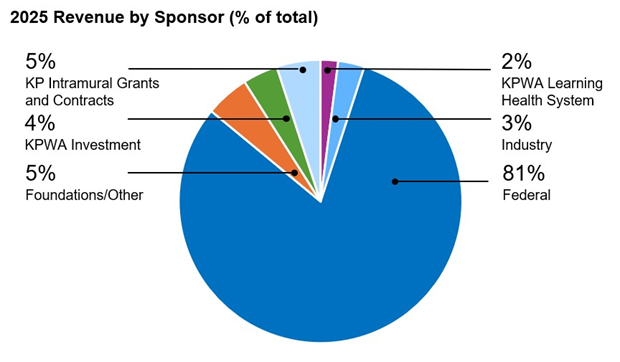
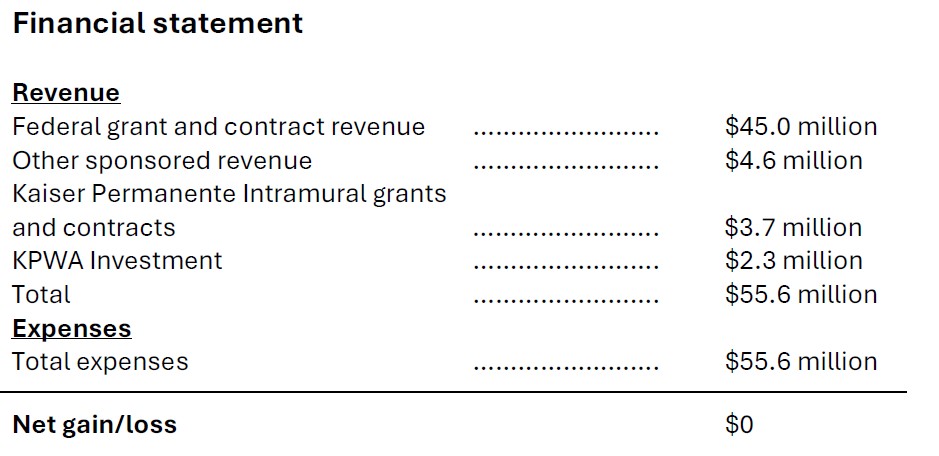
In 2025, KPWHRI’s operating budget was $55.6 million. Federal grant and contract revenue totaled $45.0 million, other sponsored revenue was $4.6 million, and Kaiser Permanente Intramural grants and contracts revenue was $3.7 million. Our number of active grants stood at 263.
Download a PDF of the 2025 annual report.
Fast Facts
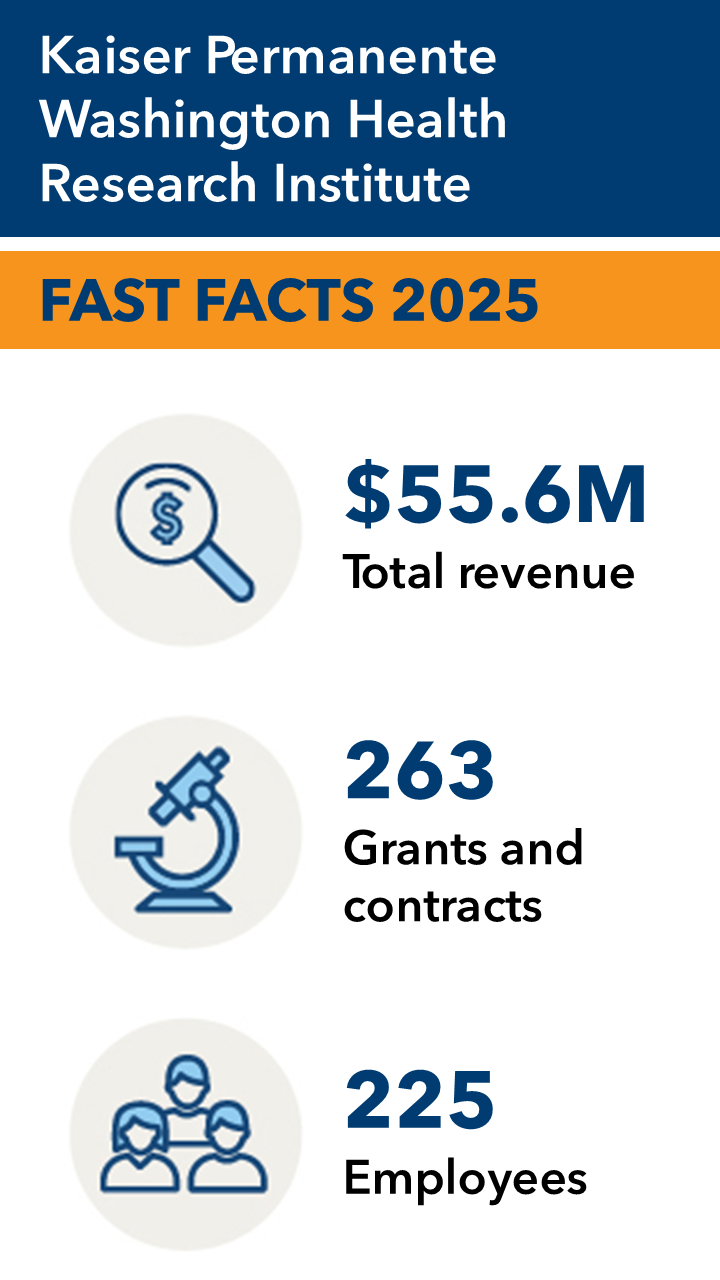


The research findings above, and all of the institute’s work in 2025, would not have been possible without our team of about 230 dedicated scientists and staff. We would also like to extend a heartfelt thank you to the many collaborators, partners, participants, communities, and funders who make our research possible.
See KPWHRI’s website for more information on our research areas, capabilities, and latest news, and to subscribe to our newsletter.
Contact:
Bianca DiJulio
Senior Manager, Survey Research & Communications
bianca.s.dijulio@kp.org
1730 Minor Ave., Suite 1360
Seattle, WA 98101kpwashingtonresearch.org