
Eye changes may signal Alzheimer’s disease risk
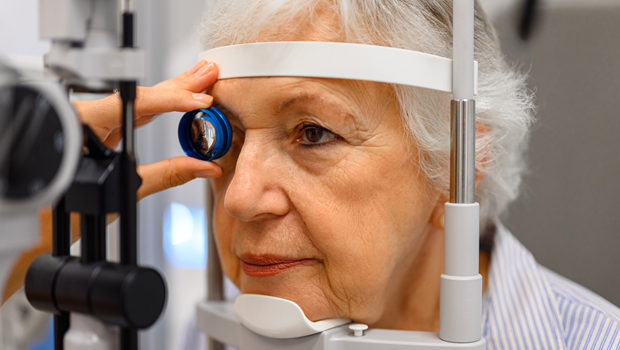
Routine eye exams could help identify people at increased risk by assessing signs of age-related macular degeneration
A new study adds to the evidence that age-related changes in the eyes may provide clues about Alzheimer’s disease risk. Researchers found that older adults with more severe signs of age-related macular degeneration (AMD) in eye exams had a higher chance of developing Alzheimer’s, regardless of whether they had a formal diagnosis of AMD.
“These findings suggest that routine eye exams could provide an effective, accessible way to identify older adults with an elevated risk of Alzheimer’s, even before they have any noticeable symptoms of AMD,” said Chloe Krakauer, PhD, a collaborative biostatistician with Kaiser Permanente Washington Health Research Institute (KPWHRI), who was the first author on the study.
What do we know already?
AMD is a leading cause of vision loss among older adults. It affects the part of the eye that controls sharp, straight-ahead vision (called the macula). There are 2 subtypes of AMD, described as “wet” and “dry.” Many people with early-stage AMD don’t have any symptoms, but signs of the disease can be detected during an eye exam.
Previous research has suggested that AMD is associated with Alzheimer’s disease risk. However, these studies haven’t looked separately at AMD subtypes or at varying degrees of severity. Most studies also haven’t included people with AMD that hasn’t yet been clinically diagnosed.
To fill these gaps, researchers analyzed data from the Adult Changes in Thought (ACT) Study, which follows thousands of older adults receiving care at Kaiser Permanente Washington to better understand Alzheimer’s disease and brain aging. Through a related study called Eye ACT, they searched electronic health record data from ACT participants’ eye exams to identify signs of AMD. To assess the severity of AMD in each of the participants’ eyes, they used 10-point scoring systems for dry and wet AMD, with 0 indicating no evidence of AMD and 10 indicating very severe AMD.
What did the new study find?
The study included 2,611 ACT Study participants who had an average age of 76 and at least one eye exam meeting the study’s criteria. Over an average of 6.8 years of follow-up, 550 people were diagnosed with Alzheimer’s disease. The researchers found that as AMD severity increased, so did participants’ risk of Alzheimer’s: For both wet and dry AMD, Alzheimer’s risk increased by 4 percent with each 1-point increase in AMD score.
When researchers looked separately at people with and without an AMD diagnosis, the association between AMD severity and Alzheimer’s risk was strongest for those not yet diagnosed. This was an unexpected finding, say the researchers, but it affirms the value of monitoring AMD-related changes in routine eye exams rather than relying on a diagnosis of AMD when evaluating Alzheimer’s risk.
“What excites me most about this work is proving that routine data from everyday eye appointments contains hidden, invaluable signals regarding our broader brain health,” said senior author Cecilia Lee, MD, MS, the Jane Hardesty Poole Distinguished Professor at WashU Medicine and an affiliate investigator with KPWHRI. “By looking through the eye as a window to the brain, we hope to establish scalable, noninvasive surveillance tools that can identify who is at high risk of Alzheimer’s long before traditional cognitive symptoms appear, or before severe eye health deficits even develop.”
In future studies, the research team plans to explore whether specific changes related to AMD — such as scarring on the macula — are stronger determinants of Alzheimer’s risk than the overall AMD severity score. This research could shed light on the relationship between AMD and Alzheimer’s, perhaps uncovering shared pathways and causes.
KPWHRI coauthors on the study include Yu-Ru Su, Rod Walker, Dana Lee, David Cronkite, Nicole Gatto, and David Arterburn.
Read the paper: Age-related macular degeneration severity and risk of Alzheimer's disease in older adults in a prospective, community-based cohort study
By Sophie Ramsey

Featured
Researcher
Chloe Krakauer, PhD
Collaborative Biostatistician
Access researcher directory
Learn About the ACT Study

Understanding brain aging
For over 30 years, the Adult Changes in Thought (ACT) Study has been advancing our understanding of cognition, aging, and better ways to delay and prevent Alzheimer’s disease and related dementias.
Research
Alzheimer’s vision study improved with home testing
The research builds on the ongoing Adult Changes in Thought (ACT) Study, started in 1994.
Research

Cataract surgery linked with lessened dementia risk
JAMA Internal Medicine study finds cataract surgery associated with 30% lower risk of dementia in aging population.