
Andrea J. Cook, PhD
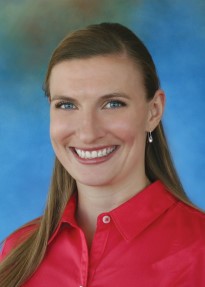
“National interest in using data to improve patient care and safety is growing. Our group is developing the biostatistical methods for that work.”
Andrea J. Cook, PhD
Senior Biostatistics Investigator, Kaiser Permanente Washington Health Research Institute
Andrea.J.Cook@kp.org
206-287-4257
Biography
Andrea Cook, PhD, is a biostatistician whose work focuses on leveraging available data such as electronic health records (EHRs) to efficiently address important public health questions and improve the overall health of our population. Dr. Cook has developed research methods using EHRs and other existing health care data for major initiatives led by the National Institutes of Health (NIH), the Centers for Disease Control and Prevention (CDC), and the U.S. Food and Drug Administration (FDA). Her work spans many areas, including hypertension control, cancer screening, obesity, diabetes, built environment, and alternative medicine for pain.
The goal of Dr. Cook’s research is finding interventions that improve patient care. She studies how pragmatic clinical trials, which are conducted under real-world conditions in health care organizations such as Kaiser Permanente Washington, can deliver more effective care and improve patient outcomes. Dr. Cook is a lead biostatistician for the Biostatistics and Study Design Core of the NIH Collaboratory, which facilitates the implementation of pragmatic clinical trials. She addresses the numerous statistical challenges of pragmatic clinical trials including how to design studies to answer research questions without impeding the delivery of care and how to use EHRs for more cost-effective studies.
Dr. Cook also studies how to use EHR data to improve the way we monitor the safety of new medical products including vaccines, drugs, and medical devices. She contributes to the FDA Sentinel Initiative and the CDC Vaccine Safety Datalink and has led the development of new statistical methods for actively monitoring medical products for rare adverse events using distributed data networks.
Dr. Cook obtained her PhD in biostatistics from the Harvard T.H. Chan School of Public Health in 2005. She is a member of the American Statistical Association and the Western North American Region of the International Biometric Society. She is also an affiliate professor in biostatistics at the University of Washington.
Research interests and experience
-
Biostatistics
Causal inference; clinical trials; longitudinal data analysis; survival analysis; spatial statistics; nonparametrics; rare disease outcomes; missing data; electronic data; distributed data; postmarketing drug and vaccine safety; study design and analysis -
Vaccines & Infectious Diseases
Vaccine safety; methods for observational studies -
Obesity
Role of built environment; obesity prevention and control; nutrition
-
Complementary & Integrative Health
Comparative effectiveness methods -
Medication Use & Patient Safety
Analysis of longitudinal data; sequential methods
-
Behavior Change
Physical activity; nutrition; built environment
Recent publications
Courcoulas A, Coley RY, Clark JM, McBride CL, Cirelli E, McTigue K, Arterburn D, Coleman KJ, Wellman R, Anau J, Toh S, Janning CD, Cook AJ, Williams N, Sturtevant JL, Horgan C, Tavakkoli A, PCORnet Bariatric Study Collaborative Interventions and Operations 5 Years After Bariatric Surgery in a Cohort From the US National Patient-Centered Clinical Research Network Bariatric Study 2020 Mar;155(3):194-204. doi: 10.1001/jamasurg.2019.5470. PubMed
Shi X, Wellman R, Heagerty PJ, Nelson JC, Cook AJ Safety surveillance and the estimation of risk in select populations: Flexible methods to control for confounding while targeting marginal comparisons via standardization 2020 Feb 20;39(4):369-386. doi: 10.1002/sim.8410. Epub 2019-12-10. PubMed
Cook AJ, Wellman RD, Marsh T, Shoaibi A, Tiwari R, Nguyen M, Boudreau D, Weintraub ES, Jackson L, Nelson JC Applying sequential surveillance methods that use regression adjustment or weighting to control confounding in a multi-site, rare event, distributed setting: Part 2 In-Depth Example of a re-analysis of the measles-mumps-rubella-varicella combination vacci 2019 Sep;113:114-122. doi: 10.1016/j.jclinepi.2019.04.019. Epub 2019-05-02. PubMed
Parchman ML, Anderson ML, Dorr DA, Fagnan LJ, O'Meara ES, Tuzzio L, Penfold RB, Cook AJ, Hummel J, Conway C, Cholan R, Baldwin LM A Randomized Trial of External Practice Support to Improve Cardiovascular Risk Factors in Primary Care 2019 Aug 12;17(Suppl 1):S40-S49. doi: 10.1370/afm.2407. PubMed

Research
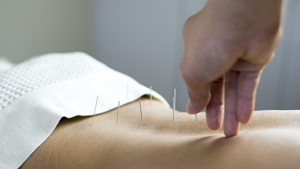
Acupuncture safe and effective for chronic low back pain in older adults
NIH-funded study finds that acupuncture improves pain, physical functioning.
Research

Remote programs effective for chronic pain, study finds
Telehealth and online cognitive behavioral therapy could expand treatment options for chronic pain in rural areas.
Research

Neighborhood density connected to changes in body mass index for children
Study uses geographic data to track change over time.
Research

Can where you move impact future weight gain?
A new study finds that moving from low- to high-density neighborhoods might be related to reductions in weight gain.