
Chloe Krakauer, PhD, MS

"I strive to use existing methods and develop novel approaches to extract unbiased information efficiently from electronic health data to increase health and wellness for all. I am particularly passionate about tailoring communication of quantitative results to intended audiences to encourage optimal decision-making."
Chloe Krakauer, PhD, MS
Senior Collaborative Biostatistician, Kaiser Permanente Washington Health Research Institute
Biography
Dr. Krakauer received her master’s degree in biostatistics from the University of Washington (UW) in 2014 and her doctorate in biostatistics from UW in 2021. Since 2021, Dr. Krakauer has worked as a collaborative biostatistician at KPWHRI.
Dr. Krakauer is currently a statistician with the Adult Changes in Thought (ACT) study, which aims to provide longitudinal data for the study of Alzheimer’s disease and related dementias and to identify Alzheimer’s risk factors. Dr. Krakauer has studied and continues to study multiple risk factors for Alzheimer’s and worsening cognition, including complications during pregnancy, eye health disparities, use of anticholinergics, and living arrangements.
Dr. Krakauer continues to contribute to analyses of clinical trials on addiction, including smoking cessation (ongoing GEMS clinical trial and prior pilot studies) and opioid cessation (the STRIPE study). Her scientific areas of particular interest include women’s health (pregnancy and peri/post-menopause) and treatment of weight and resulting bias in health care.
Her primary statistical methodological interest is in missing data. She continues to study optimal methods for addressing missing data through her dissertation work (focusing on regression with data missing not at random), research with the FDA Sentinel project, and methodological work using ACT Study data on addressing interval-censored covariates. Her additional area of particular methodological interest is quantitative communication and how it may better inform individual medical decision-making.
Research Interests and Experience
-
Aging & Geriatrics
-
Behavior Change
Dental care
-
Biostatistics
Missing data, Bayesian statistics, decision theory, selection bias
-
Chronic Illness Management
-
Health Services & Economics
Quality of care at small practices
Recent Publications
Shaw PA, Gruber S, Williamson BD, Desai R, Shortreed SM, Krakauer C, Nelson JC, van der Laan MJ A Cautionary Note for Plasmode Simulation Studies in the Setting of Causal Inference 2026 Aug;45(18-19):e70676. doi: 10.1002/sim.70676. PubMed
Williamson BD, Krakauer C, Johnson E, Gruber S, Shepherd BE, van der Laan MJ, Lumley T, Lee H, Hernández-Muñoz JJ, Zhao F, Dutcher SK, Desai R, Simon GE, Shortreed SM, Nelson JC, Shaw PA Assessing Treatment Effects in Observational Data With Missing Confounders: A Comparative Study of Practical Doubly-Robust and Traditional Missing Data Methods 2026 Feb;45(3-5):e70366. doi: 10.1002/sim.70366. PubMed
Harrington LB, Tom SE, Krakauer C, Wartko PD, Chau K, Muiruri R, Micks E, McEvoy LK, LaCroix AZ, Miller EC Adverse Pregnancy Outcomes and Cognitive Change in Older Women 2026 Jan;35(1):31-40 doi:10.1177/15409996251383009. doi: 10.1177/15409996251383009. Epub 2025-09-29. PubMed
Krakauer CA, Reilly L, Su YR, Walker RL, Lee D, Xaiyamuangchanh VA, Cronkite DJ, Gatto NM, Crane PK, Chew EY, Arterburn DE, Lee CS Age-related macular degeneration severity and risk of Alzheimer's disease in older adults in a prospective, community-based cohort study 2026 Jan;18(2):e70368. doi: 10.1002/dad2.70368. Epub 2026-05-25. PubMed
Lee CS, Su YR, Walker RL, Krakauer C, Blazes M, Johnson EA, Cronkite D, Bowers W, Hess C, Arterburn D, Agrón E, Chew EY, Crane PK A Novel AMD Severity Scoring System Leveraging the AREDS Studies and Routine Clinical Electronic Medical Records 2025 Oct;132(10):1076-1087. doi: 10.1016/j.ophtha.2025.04.026. Epub 2025-04-29. PubMed
Li KH, Krakauer C, Nelson JC, Crane PK, Andre JB, Curl PK, Yuh E, Mossa-Basha M, Ralston JD, Mac Donald CL, Gray SL Cumulative anticholinergic exposure and white matter hyperintensity burden in community-dwelling older adults 2025 Apr;73(4):1115-1124. doi: 10.1111/jgs.19325. Epub 2024-12-19. PubMed
McClure JB, Heffner JL, Krakauer C, Mun S, Catz SL A Novel mHealth App for Smokers Living With HIV Who Are Ambivalent About Quitting Smoking: Formative Research and Randomized Feasibility Study 2024 Jul 8;8:e58063. doi: 10.2196/58063. Epub 2024-07-08. PubMed

Research
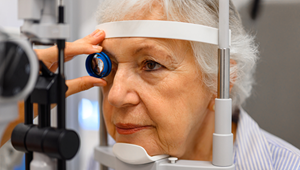
Eye changes may signal Alzheimer’s disease risk
Routine eye exams could identify people at increased risk by assessing signs of age-related macular degeneration.
Research

Digital tool could help people change smoking habits
A mobile application designed to engage smokers who are ambivalent about quitting shows promising results.
Research
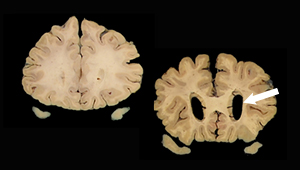
Study evaluates biomarker criteria for Alzheimer’s risk
One-third of people classified as ‘highest risk’ may not develop Alzheimer’s disease, study suggests