
Linda K. McEvoy, PhD
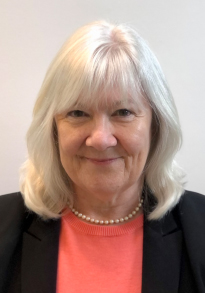
“My research goals are to further our understanding of the wide variety of factors that influence cognitive and brain health in aging, to inform strategies to reduce risk of dementia.”
Linda K. McEvoy, PhD
Senior Investigator, Kaiser Permanente Washington Health Research Institute
Biography
Linda K. McEvoy, PhD, is a senior investigator at Kaiser Permanente Washington Health Research Institute (KPWHRI) and professor emerita at the University of California (UC) San Diego. Dr. McEvoy uses epidemiological approaches to improve the understanding of cognitive and brain changes in typical aging and in neurodegenerative disorders such as Alzheimer’s disease. Her mission is to better understand the factors that may affect cognitive and brain health in aging, with the goal of informing strategies to maintain cognitive health and reduce dementia risk. These factors include genetic, health, behavioral, environmental, and psychosocial exposures across the life course.
Dr. McEvoy joined KPWHRI in 2023 to take over leadership of the ground-breaking Adult Changes in Thought (ACT) Study following the retirement of the study’s founder, Dr. Eric Larson. ACT is a large, longitudinal study of members of Kaiser Permanente Washington that began in1994 and has created a rich resource for the aging research community to examine factors that affect cognitive and brain health in aging.
In addition to her work on the ACT Study, Dr. McEvoy also performs research using data from the Women’s Health initiative, examining blood-based biomarkers of dementia risk, including epigenetic and proteomic measures.
Dr. McEvoy enjoys mentoring students, fellows, and junior faculty. At UC San Diego, she had leadership roles on several aging and Alzheimer’s disease training programs funded by the National Institutes of Health (NIH), and she taught courses in grant writing to junior faculty. She enjoys sharing her knowledge on the characteristics of successful grant applications, which she has accumulated through service on several NIH study sections.
Research interests and experience
-
Aging & Geriatrics
-
Dementia
-
Genetic Risk Factors of Alzheimer’s Disease
-
Neuroimaging Data
-
Social Determinants of Health
Recent Publications
Funk-White M, Wing D, Eyler LT, Moore AA, Reas ET, McEvoy L. Neuroimaging-derived predicted brain age and alcohol use among community-dwelling older adults. Am J Geriatr Psychiatry. 2023 Feb 20;S1064-7481(23)00217-8. doi: 10.1016/j.jagp.2023.02.043. PubMed
McEvoy LK, Bergstrom J, Hagler DJ, Wing D, Reas ET Elevated Pure Tone Thresholds Are Associated with Altered Microstructure in Cortical Areas Related to Auditory Processing and Attentional Allocation 2023 Jan;96(3):1163-1172. doi: 10.3233/JAD-230767. PubMed
Wang X, Sundermann EE, Buckley RF, Reas ET, McEvoy LK, Banks SJ, A4 Study Team Sex Differences in the Associations of Obesity with Tau, Amyloid PET, and Cognitive Outcomes in Preclinical Alzheimer's Disease: Cross-Sectional A4 Study 2023 Jan;95(2):615-624. doi: 10.3233/JAD-230466. Epub 2023-08-07. PubMed
Posis AIB, Yarish NM, McEvoy LK, Jain P, Kroenke CH, Saquib N, Ikramuddin F, Schnatz PF, Bellettiere J, Rapp SR, Espeland MA, Shadyab AH. Association of social support with mild cognitive impairment and dementia among older women: The Women's Health Initiative Memory Study. J Alzheimers Dis. 2023;91(3):1107-1119. doi: 10.3233/JAD-220967. PubMed
Gustavson, DE, Archer, DB, Elman, JA, Puckett, OK, Fennema-Notestine C, Panizzon MS, Shashikumar N, Hohman TJ, Jefferson AL, Eyler LT, McEvoy, LK, Lyons, MJ, Franz CE, Kremen WS. Associations among executive function abilities, free water, and white matter microstructure in early old age. Neuroimage Clin. 2023;37:103279. doi: 10.1016/j.nicl.2022.103279. Epub 2022 Dec 1. PubMed

Research

Blood test predicts dementia in women years before symptoms begin
Study finds biomarker p-tau217 strongly linked to future dementia risk.
Research

Autopsy study links BP drugs to possible brain benefits
Research supports theory that some blood pressure medications may provide extra protection against dementia.
Research
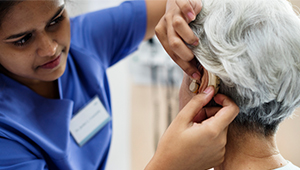
Can preventing hearing loss reduce dementia risk?
New research from Linda McEvoy, PhD, helps explain how hearing loss affects the brain.