Autopsy study links BP drugs to possible brain benefits

Research supports theory that some blood pressure medications may provide extra protection against dementia
Having high blood pressure significantly increases the risk of dementia later in life — but taking blood pressure medicines (antihypertensives) can help lower this risk. Now, a new study published in JAMA Network Open adds to the evidence that certain antihypertensives may be more beneficial for brain health than others.
“This is the first autopsy study to examine whether a common group of antihypertensives called angiotensin II-stimulating drugs may be associated with better brain health than a related group called angiotensin II-inhibiting drugs, separate from their effect on blood pressure,” said lead author Shelly Gray, PharmD, MS, a professor at the University of Washington School of Pharmacy and an affiliate investigator with Kaiser Permanente Washington Health Research Institute (KPWHRI). “Our findings expand on earlier research by pointing to specific pathways through which these medications may lower the risk of Alzheimer’s and other types of dementia.”
What do we know already?
Many common antihypertensive drugs work by targeting receptors on cells that mediate the effects of the hormone angiotensin II — a key regulator of blood pressure. Medications that stimulate these receptors (Ang II-stimulating drugs) include angiotensin II receptor blockers (ARBs), dihydropyridine calcium channel blockers (CCBs), and thiazide diuretics. Those that inhibit these receptors (Ang II-inhibiting drugs) include angiotensin-converting enzyme inhibitors (ACE-Is), beta-blockers, and non-dihydropyridine CCBs.
Studies in animals have suggested that Ang II-stimulating medicines may benefit the brain beyond their blood pressure-lowering effects. Referred to as the “angiotensin hypothesis,” this theory has been supported by studies finding that people who take Ang II-stimulating medicines have a lower risk of dementia than those who take Ang II-inhibiting drugs. However, the pathways through which Ang II-stimulating medicines may promote brain health are unclear.
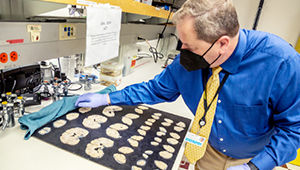
To learn more, researchers analyzed data and brain autopsies from the Adult Changes in Thought (ACT) Study, which has enrolled and followed thousands of older adults receiving care at Kaiser Permanente Washington since 1994. Many ACT Study participants agree to donate their brain to research after their death, allowing scientists to closely examine the types of pathology (disease) present in people who die with or without dementia.
What did the new study find?
The study included 756 people who had taken Ang II-stimulating or Ang II-inhibiting medicines for high blood pressure for at least one year after enrolling with Kaiser Permanente Washington and prior to their death. The researchers examined their brain autopsies for signs of injury and pathology related to Alzheimer’s disease, vascular dementia, and other types of dementia.
After taking into account participants’ blood pressure and other factors that could affect the results, the researchers found that:
- Long-term use of Ang II-stimulating medications (15 years or more) was associated with a 24% lower risk for arteriolosclerosis — the thickening and hardening of the smallest arteries, which is a cause of vascular dementia and has also been linked to Alzheimer’s disease.
- Use of Ang II-stimulating medications was also associated with lower levels of phosphorylated tau protein in several brain regions. Higher amounts of this protein are linked to memory problems and Alzheimer's dementia.
“These findings give added weight to the angiotensin hypothesis and provide intriguing insights into how these commonly used blood pressure medicines may impact dementia risk,” said coauthor Nicole Gatto, PhD, MPH, a principle collaborative scientist with KPWHRI.
The researchers hope their findings will spur more studies on both Ang II-stimulating medicines and other antihypertensives. “This is a promising area of research that could potentially lead to new avenues for dementia prevention,” said coauthor Linda McEvoy, PhD, a KPWHRI senior investigator who is co-principal investigator for the ACT Study.
The team is now continuing their research on the angiotensin hypothesis with studies looking at dementia outcomes and brain pathology detected through imaging.
Additional KPWHRI coauthors on the study include Onchee Yu, MS; Yu-Ru Su, PhD; Pamela Shaw, PhD; and affiliate investigators Zachary Marcum, PharmD, PhD; C. Dirk Keene, MD, PhD; and Paul Crane, MD, MPH.
Read the paper: Angiotensin II-stimulating antihypertensive medications and dementia-related neuropathology, published in JAMA Network Open.
By Sophie Ramsey

Learn About the ACT Study
Understanding brain aging
For over 30 years, the Adult Changes in Thought (ACT) Study has been advancing our understanding of cognition, aging, and better ways to delay and prevent Alzheimer’s disease and related dementias.
2025 ACT Symposium
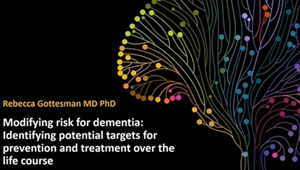
ACT Research Symposium meets virtually to discuss brain aging science
This year’s symposium was a virtual event drawing over 130 attendees.
Research
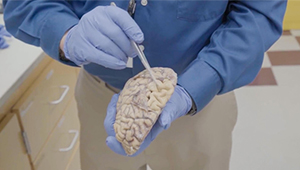
ACT Study contributes to understanding Alzheimer’s disease in brain cells
Mapping the disease at the cellular level identifies possible new treatment targets.
News
New open data to help understand Alzheimer’s
Cell by cell, scientists are building a high-resolution map of brain changes in Alzheimer’s disease.