
Addictions

“Many people have questions or concerns about alcohol and other drug use — and don’t know where to turn. Our research focuses on practical ways to integrate care for alcohol, cannabis, and other substance use into routine health care so people have easy access to information and patient-centered treatment options.”
Katharine A. Bradley, MD, MPH
Senior Investigator, Kaiser Permanente Washington Health Research Institute
Physician, Washington Permanente Medical Group, Internal Medicine
Scientists at Kaiser Permanente Washington Health Research Institute (KPWHRI) conduct innovative research to help patients and their care teams prevent and treat problems caused by use of alcohol, cannabis, opioids, and other drugs.
For more than 3 decades, KPWHRI researchers have focused on improving how health systems measure and address alcohol and drug use in nonjudgmental, patient-centered ways, as part of whole-person health. This has resulted in innovations in care and practical tools for patients. For example, KPWHRI’s alcohol-related research has led to resources — including a patient decision aid and video — that help overcome stigma so that patients and families can find the help they want and need.
KPWHRI researchers also conduct studies to improve screening for substance use and how this is documented in the electronic health record, including for both medical and nonmedical cannabis use. Another focus is ensuring that evidence-based treatments for alcohol and drug use are accessible to the patients who may benefit from them.
Research highlights
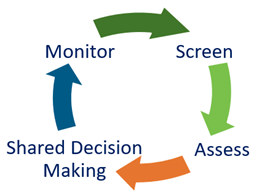 Adding alcohol-related care to primary care
A KPWHRI study found that a novel approach to integrating alcohol-related care into primary care increased annual alcohol screening and preventive counseling. The study — called the Sustained Patient-Centered Alcohol-Related Care (SPARC) trial — also demonstrated an adaptable approach for integrating behavioral health care into primary care. To assist other health systems and researchers, the study team has shared tools and resources for behavioral health integration on the SPARC website.
 Gleaning insights on cannabis use
Washington was one of the first states to legalize recreational cannabis use in 2012. As a result, Kaiser Permanente Washington researchers are uniquely positioned to study the impact of cannabis use on patients' lives and health. KPWHRI research suggests that 1 in 5 people who use cannabis daily are at risk for moderate to severe cannabis use disorder. However, the risk may be lower with medical cannabis use than recreational use.
 Improving support for opioid use disorder treatment
Most people with opioid use disorder never receive medication treatment, even though it is effective (and potentially life saving) and can be provided in primary care. A trial led by KPWHRI researchers found that more people received treatment for opioid use disorder when nurse care managers were added to primary care teams to provide support for ongoing treatment.
 Effectively managing pain without opioids
KPWHRI's Center for Accelerating Care Transformation (ACT Center) created the Integrated Pain Management (IPM) Program to provide safe alternatives to opioids for people with persistent (chronic) pain. The researchers worked with patients, care teams, and leaders at Kaiser Permanente Washington to design, implement, and evaluate a primary care-based pain management program. The IPM team also worked closely with patient partners to produce the Toolkit for Managing Persistent Pain, which offers support and resources for people with chronic pain.
 Better tools for assessing substance use disorder
Working with clinical partners, KPWHRI researchers developed an 11-item checklist to measure potential symptoms of substance use disorder. Clinicians then began using the checklist as a tool in primary care. A study confirmed the value of the checklist, finding that it did well at providing information on the presence and severity of substance use disorder. Of particular note: The checklist performed well among people of different ages, races, sexes, and ethnicities.


Recent Publications on Addictions
Kasinathan B, Matson TE, Oliver M, Bobb JF, Berger D, Hallgren KA, Jack HE Association of unhealthy alcohol use reported in routine outpatient screening with 30-day hospital readmission risk 2026 Sep;188:209984 doi:10.1016/j.josat.2026.209984. doi: 10.1016/j.josat.2026.209984. Epub 2026-04-24. PubMed
Young-Wolff KC, Chi FW, Campbell CI, Does MB, Voelkel JL, Pilato CE, Ansley D, Castellanos C, Lapham GT Neighborhood Deprivation and Contrasting Patterns of Prenatal Alcohol, Cannabis, and Nicotine Use 2026 Jun 16 doi: 10.1016/j.amepre.2026.108485. Epub 2026-06-16. PubMed
Glass JE, Wong ES, Beatty TC, Bobb JF, Brown R, Fishman P, Idu A, Lin JYL, Matson TE, Palazzo L, Ramaprasan A, Zabinsky ZB, Hyun N Using Multistate Models and Qualitative Interviews to Comprehensively Characterize Substance Use Disorder Care Transitions in a US Health Care System: Protocol for a Mixed-Methods Study 2026 May 28;15:e93043. doi: 10.2196/93043. Epub 2026-05-28. PubMed
Jeng PJ, Jalali A, Yeung K, Luce C, Lu T, Lee AK, LaBelle CT, Bradley KA, Murphy SM, PROUD Trial Collaborators The cost of implementing and sustaining the Massachusetts model 2026 Apr;32(4):e110-e117. doi: 10.37765/ajmc.2026.89923. Epub 2026-04-01. PubMed
Simon GE, Wellman R, Shortreed SM, Johnson E, Sterling SA, Coleman KJ, Ahmedani BK, Yaseen ZS, Mosholder AD Predicting and differentiating opioid and non-opioid drug poisonings using health records data 2026 Mar;182:209861 doi:10.1016/j.josat.2025.209861. doi: 10.1016/j.josat.2025.209861. Epub 2025-12-22. PubMed
Bradley KA, Hyun N, Idu A, Yu O, Bobb JF, Wartko PD, Weinstein Z, Matthews AG, McCormack J, Lee AK, Samet JH Differences in benefits of office based opioid treatment: Secondary analyses across sub-groups in the PROUD randomized controlled implementation trial 2026 Mar;121(3):629-642 doi:10.1111/add.70221. doi: 10.1111/add.70221. Epub 2025-11-24. PubMed
Researchers in Addictions
 Julie Angerhofer, PhD, MPHAssociate Investigator |
 Jennifer F. Bobb, PhDSenior Biostatistics Investigator |
 Katharine A. Bradley, MD, MPHSenior Investigator |
 Clarissa Hsu, PhDAssociate Investigator |
 Noorie Hyun, PhDAssociate Biostatistics Investigator |
 Morgan Justice, PhD, MASenior Collaborative Scientist |
 Gwen Lapham, PhD, MPH, MSWAssociate Investigator |
 Theresa E. Matson, PhD, MPHCollaborative Scientist |
 Jess Mogk, MPHCollaborative Scientist |
 Yu-Ru Su, PhDAssociate Biostatistics Investigator |
 Paige D. Wartko, PhD, MPHSenior Collaborative Scientist |
AFFLIATE RESEARCHERS
Kevin Hallgren, PhD
Associate Professor
Department of Psychiatry and Behavioral Sciences
University of Washington
Emily Williams, PhD, MPH
Investigator
Health Services Research & Development
VA Puget Sound Health Care System
Edwin Wong, PhD
Associate Professor
Department of Health Services and Population Health
University of Washington