Scientific capabilities
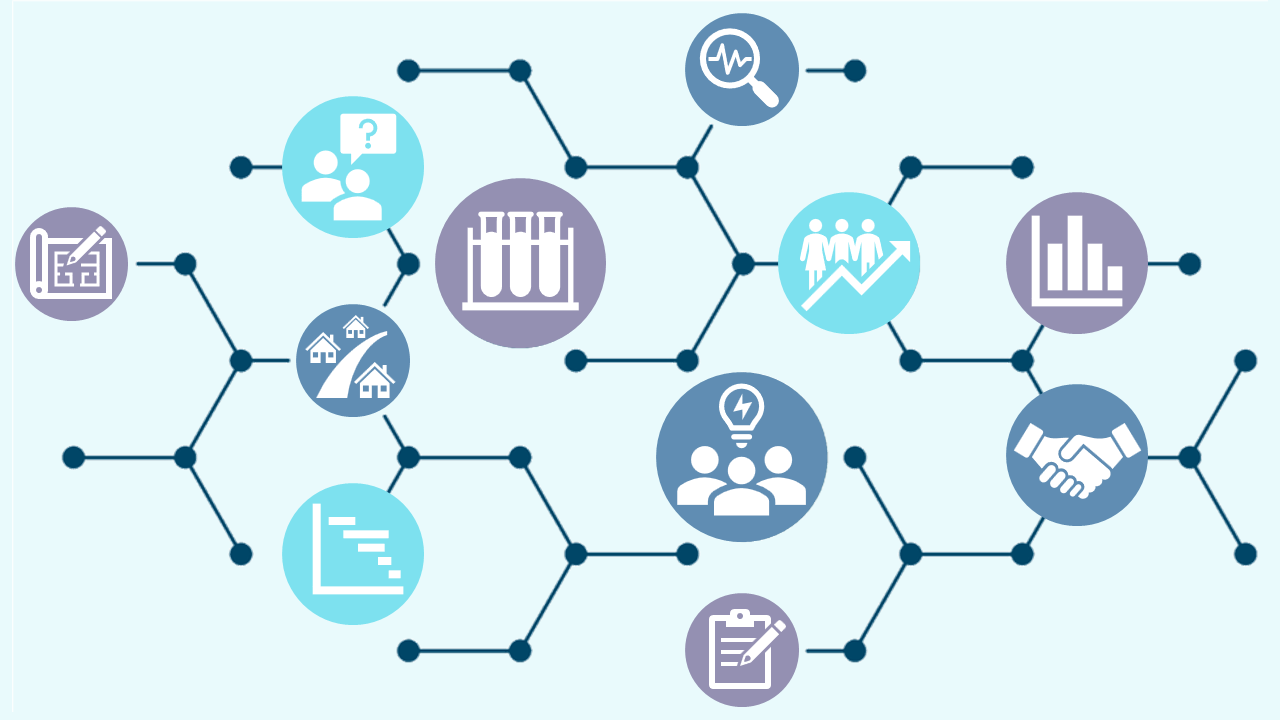
Our research teams bring a robust set of scientific capabilities to our collaborations — working together to find practical ways to improve health and health care.
World-class research capabilities for real-world settings
Our team includes physicians, scientists, and staff with expertise in data science, epidemiology, biostatistics, patient engagement, survey research, and more. We have access to comprehensive real-world patient data spanning decades, allowing for in-depth analyses. We also specialize in helping health care and community organizations learn from their own data and from the experiences of people who give and receive care.
Read more about our areas of scientific expertise and the extensive infrastructure that supports our work.
Scientific areas of expertise |
Research infrastructure |
 Clinical research
Our scientists lead a variety of clinical research studies, many of which examine health care in real-world conditions. We have a long history of using pragmatic trials to go beyond tightly controlled experiments and learn what works in everyday practice — including large, embedded studies at Kaiser Permanente Washington that have tested novel approaches to boosting cancer screening and integrating alcohol-related care into primary care. Our research teams also participate in national surveillance efforts that use data and specimens from everyday clinical care to track the safety and effectiveness of health care interventions, such as the annual flu vaccine. Additionally, we leverage our onsite research clinic to conduct clinical trials with healthy volunteers — routinely collecting biospecimens, conducting tests, and administering vaccines, including the world’s first investigational vaccine for COVID-19.
 Studies using real-world data
Our research teams collaborate with health systems nationwide to study the epidemiology, natural history, and management of illness as it is experienced by people receiving care in everyday settings. With more than 3 decades of real-world patient data — and deep expertise using electronic health records for research — we are able to conduct robust analyses among defined populations across a wide range of health conditions. One key example is the National Cancer Institute’s Breast Cancer Surveillance Consortium, a national network of breast imaging registries that combine data to assess and improve breast cancer screening and mortality. Another example is the Adult Changes in Thought Study — the longest-running study of cognitive health in the country — which has created comprehensive longitudinal datasets that support a wide array of research on brain aging.
 Innovative biostatistics
Our expert biostatisticians use electronic health record data and advanced statistical methods to generate meaningful evidence and insights that enhance the quality of research at Kaiser Permanente Washington and nationwide. Many of our biostatistics researchers are field leaders who have pioneered new methods to improve the validity, efficiency, and actionability of real-world health care evidence. They also put these new methods into practice at scale — serving as leaders in national consortia such as:
- The National Cancer Institute’s Breast Cancer Surveillance Consortium, which shapes national breast cancer screening policy
- The National Institute on Drug Abuse’s Clinical Trials Network, which evaluates treatments for substance use disorders
- The Food and Drug Administration’s Sentinel Initiative for drug safety
- The National Institutes of Health Pragmatic Trials Collaboratory, which supports pragmatic clinical trials that use existing data resources to learn about real-world care
Our biostatisticians provide wrap-around statistical support across the life cycle of complex trials and epidemiologic studies, from proposal development to analysis to dissemination.
 Advanced data analytics
Our biostatisticians also lead innovative applied statistical work, such as developing predictive models that help health systems prioritize limited resources for people at higher risk of a negative health outcome. Using clinical health care data, machine learning, and advanced statistical methods, our analytic teams design, test, and apply high-integrity predictive models — integrating them into existing electronic health record (EHR) systems. Key examples include predictive models for suicide attempts, hospitalizations or deaths from COVID-19, and missed medical appointments. This work relies on teams of interdisciplinary scientists who have expertise interpreting complex EHR and claims data and in building risk models into existing EHRs. Our data analysts also guide Kaiser Permanente and other health care organizations in creating real-time, pragmatic dashboards and equitable, AI-informed solutions that improve care, increase efficiencies, and reduce cost.
 Program & intervention design
Designing effective new health care interventions and services isn’t just about using the latest scientific evidence to guide best practices. It’s also about building programs that meet the needs of real-world patients, communities, and care teams. Our researchers are adept at quickly identifying and summarizing high-quality research evidence and then combining those insights with human-centered design methods that elicit the needs, behaviors, and preferences of end users. We also collaborate with health care leaders to develop targeted strategies and initiatives that address specific needs or challenges — such as improving screening for lung cancer and dementia — and to guide multidisciplinary groups toward shared goals with defined measures of long-term success.
 Program evaluation
When health care organizations and community-based programs launch new programs or initiatives, it’s imperative to meaningfully evaluate their implementation and outcomes. Our research teams have decades of experience designing and conducting timely, rigorous program evaluations to learn how programs and changes in care delivery affect community member and patient health, quality of care, costs, and other outcomes. We work closely with organizational leaders and community partners to define key performance indicators, track outcomes, understand implementation and context, and identify opportunities to improve promising innovations — such as new approaches to chronic pain care and cervical cancer screening, as well as cross-sector approaches to improve health for all people in communities. Leveraging unique data expertise, mixed quantitative and qualitative methods, and innovative measurement approaches, our evaluations provide timely results and actionable insights to guide adjustments, maximize program benefits, and inform spread and sustainment over time.
 Implementation support
Improving clinical practice is challenging, and busy health care organizations need support to implement lasting changes. Our research teams include practice facilitators who work closely with leaders and care teams to implement new processes designed to help improve patient health, such as supporting patients with social needs and providing proactive outreach for alcohol use disorder. We go beyond just organizing and managing the implementation effort — providing at-the-elbow support to adapt evidence-based interventions for local contexts and leading implementation teams in identifying and overcoming barriers to change. Along the way, we develop workflows, job aids, and practical supports to help make implementation easier for care teams — while ensuring that electronic health record tools align with new workflows. We also build dashboards to track key outcomes over time, document best practices to support systemwide spread, and recommend strategies for sustaining improvements.
 Partner engagement
Across our work to design, implement, and evaluate health care programs and interventions, we use proven engagement methods to elicit diverse perspectives from patients, families, and communities to ensure solutions are built around real-world needs. Our scientists were among the first to have projects funded by the Patient-Centered Outcomes Research Institute in 2012 — work that catalyzed a new Community Resource Specialist program at Kaiser Permanente Washington and led to the development of public-domain resources to support patient engagement in research. We also have decades of experience engaging health care leaders and care teams in collaborating to develop and implement process improvements that are built to solve day-to-day challenges in ways that are practical and sustainable.
Our research teams have expertise in a variety of qualitative research methods, such as interviews, focus groups, and participant observations to bring to light the lived experience of the people and communities that health care organizations serve — providing real-world stories and examples that can’t be surfaced by quantitative data alone. Our researchers are leaders in developing new qualitative methods, such as the Rapid Group Analysis Process (Rap-GAP) — a faster and more efficient approach to qualitative analysis. Rap-GAP also allows researchers to engage more people in the sense-making process, including people who aren’t trained in qualitative analysis. This helps ensure that research findings incorporate important perspectives from the people directly involved in or affected by the questions being studied.
 Community & organizational assessment
Our Center for Community Health and Evaluation (CCHE) helps to improve the health of communities nationwide with collaborative approaches to planning, assessment, and evaluation. For more than 30 years, CCHE teams have partnered with communities and organizations throughout the United States to design and conduct tailored evaluations across diverse settings and systems — such as this collaboration to advance trauma- and resilience-informed pediatric care in safety net settings. From understanding community strengths and needs to assessing organizational capacity, we combine a mixed-methods approach with partner participation to collect and interpret data, identify priorities, and develop actionable findings for planning and improvement. Our assessments vary widely in size and scope, from large-scale, multisite community health assessments to focused assessments of organizational capacity and readiness.

OTHER CAPABILITIES
Visit the ACT Center
Moving research into action, together
KPWHRI’s Center for Accelerating Care Transformation improves health for people and communities by streamlining the path from research to practice.
Learn about CCHE
Improving the health of communities
KPWHRI’s Center for Community Health and Evaluation designs and evaluates health-related programs and initiatives across the United States.