Experts convene to advance brain aging research

The 2026 ACT Research Symposium showcased innovations and milestones, celebrating 5 years of expanded funding
For more than 30 years, the Adult Changes in Thought (ACT) Study has brought together researchers from diverse disciplines to advance understanding of brain health and aging. Perhaps nowhere is this tradition of collaboration more apparent than at the annual ACT Research Symposium — and the 2026 symposium was no exception.
The symposium provides a forum to showcase ACT Study findings, highlight current research, and foster collaboration within the broader research community. The ACT Study is a long-running cohort study that follows older adults who receive care as Kaiser Permanente Washington members. Since 1994, thousands of adults have enrolled in the study, providing valuable data to help researchers find ways to prevent and treat Alzheimer’s disease and other forms of dementia.
For this year’s symposium, more than 110 presenters, researchers, and other attendees gathered online for a virtual 2-day event. The 2026 symposium also celebrated an important ACT Study milestone: 5 years of U19 funding from the National Institutes of Health. The NIH’s U19 awards support large scale collaborative studies that are designed to significantly advance knowledge in important areas — in the case of ACT, to advance knowledge on brain health in aging.
“This year’s symposium — our 13th — provided a way to highlight both the accomplishments we've made in these 5 years and to let other researchers know about the resources we have developed to spur more collaborations,” said Linda McEvoy, PhD, a co-lead investigator of the ACT Study and a senior investigator with Kaiser Permanente Washington Health Research Institute (KPWHRI).
The richness of the ACT Study’s resources and data attracts a wide variety of researchers and potential collaborators to the symposium. “Because of the breadth of topics that ACT can cover, there may be neuropathologists, there may be neuropsychologists, there may be geriatricians, there may be economists in attendance,” said KPWHRI Principal Collaborative Scientist Nicole Gatto, PhD, MPH, who leads the organizing committee for the symposium.
McEvoy and Gatto recently shared some of their highlights from this year’s event. For those who’d like to learn more, presentation recordings and slides are available on the ACT Study website. Speaker recordings and slides from this
Showcasing milestones from the past 5 years
Since transitioning to U19 funding in 2021, the ACT Study has broadened its focus to include 6 research support cores and 3 main research projects — and all had notable accomplishments in the last 5 years.
“At this year’s symposium, each project and core had the opportunity to reflect on what they achieved and to be able to really showcase that,” said Gatto.
Highlights from ACT’s support cores
The support cores help facilitate ACT research and optimize the study’s resources for the wider scientific community. Some noteworthy milestones:
- After COVID-related enrollment dips, ACT’s Clinical Core achieved the goal of enrolling more than 1,000 new ACT participants and diversified the cohort to better represent older adults in the region.
- ACT’s Administrative Core created a formal Proposals and Publications (P&P) infrastructure, which evaluates requests for data for new scientific studies. The P&P committee has evaluated and approved 219 requests since October 2022 and now lists these approved projects on ACT’s expanded website.
- In the Life Course Core, new surveys of ACT Study participants now capture data on childhood adversity and neighborhood environmental exposures, which may influence cognition over time. Geocoding also links participants’ residential addresses to potential social and environmental influences, such as air pollution.
- Like many studies, ACT collects brain scans from participants who volunteer for a research MRI. ACT’s Neuroimaging Core also repurposes clinical MRI scans from study participants to use in research. Over the last 5 years, this has increased ACT’s neuroimaging dataset to nearly 2,000 scans and created a more diverse and representative sample of scans.
- Many ACT participants continue to advance research after death by donating their brains to the study. ACT’s Neuropathology Core is increasing the amount of information we can learn from these generous gifts by developing methods to quantify different types of disease in the brain, including arteriolosclerosis (the hardening of small arteries) and tau pathology, which is one of the leading causes of Alzheimer’s disease.
- ACT’s Data and Analysis Core keeps track of the study’s vast amount of information and has set up a resource to help statisticians analyze ACT’s complex, longitudinal data.
Highlights from ACT’s projects
- In the sleep and activity monitoring project, researchers are studying links between brain health and the 24-hour activity cycle (exercise, sedentary behavior, sleep) as measured by activity monitors. Among other findings, the team reported that reducing sedentary time by 30 minutes daily was associated with less cognitive decline and better physical function. “These are important findings,” said McEvoy. “You don't have to get up and go for a jog but just get up and walk around for a bit.”
- The Alzheimer's cognitive subtypes project is exploring subtypes of Alzheimer's disease based on cognitive profiles — and linking these to distinct genetic, neuroimaging, and neuropathologic features. This research could one day lead to more individualized diagnoses and treatments for Alzheimer’s. Recent findings have had practical implications: “The costs associated with looking after people who have different cognitive subtypes differs quite a bit — for example, Alzheimer’s with language impairment was associated with higher costs,” said McEvoy.
- The translational pharmacoepidemiology project aims to understand how drugs commonly used by older adults for blood pressure, bladder problems, sleep issues, and other conditions may affect the progression of cognitive decline. The research team shared findings showing that recent use of certain blood pressure medications was associated with lower risk of dementia. “In the future, thought may be given to prescribing antihypertensives that, in addition to managing blood pressure, also have some benefit for cognitive health,” said Gatto.
Fostering research partnerships and innovations
The spirit of collaboration at the 2026 symposium extended beyond ACT-affiliated projects to showcase the work of scientists in the broader research community, providing a forum for connection and future research partnerships.
“We had two groups talking about neuropathology and similar work they're doing on understanding how vascular disease contributes to the risk of dementia, and they're each developing quantitative neuropathology tools,” said McEvoy. “So there was a lot of interest between these two groups to follow up — let's see what we can learn from each other.”
The symposium also featured presentations from junior investigators, including a talk on advanced stem cell approaches to uncover how specific genetic risk factors affect brain cells to increase the likelihood of dementia, and how genes and environment may interact to affect brain cells and dementia risk. Another junior investigator presented a proposal for using ACT Study activity monitoring data to analyze whether changes in gait (walking) can provide an early sign of cognitive impairment.
Concluding their highlights, McEvoy and Gatto shared one final presentation that underscored the importance and impact of the research featured at the symposium. This was a talk on The Memory Hub — a community-based organization offering enrichment activities, caregiver support, and engagement for people and families living with dementia.
“A lot of research has talked about the importance of social engagement, cognitive stimulation, physical activity — and The Memory Hub is implementing all of that,” said McEvoy. “So it was a really nice presentation that reinforced why we're doing the work that we're doing.”
By Sophie Ramsey

Learn About the ACT Study
Understanding brain aging
For over 30 years, the Adult Changes in Thought (ACT) Study has been advancing our understanding of cognition, aging, and better ways to delay and prevent Alzheimer’s disease and related dementias.
2025 ACT Symposium
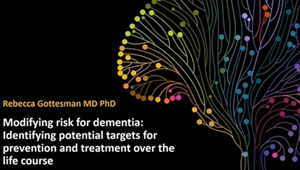
ACT Research Symposium meets virtually to discuss brain aging science
This year’s symposium was a virtual event drawing over 130 attendees.
2024 ACT Symposium
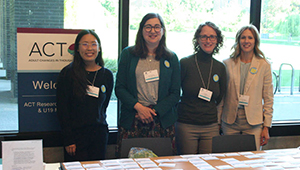
Researchers connect for ACT Symposium, advancing science on dementia, aging
The long-running ACT Study is now in its 30th year.
2023 ACT Symposium

Researchers gather to address critical topics in aging and dementia
The ACT Research Symposium returns with an in-person scientific forum.