
Cardiovascular Health
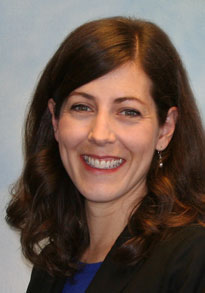
“One in four deaths in the United States is attributed to heart disease. Our researchers study how behavior, environment, and genetics affect heart health and how screening and treatment can reduce risk.”
Research overview
Heart disease is the leading cause of death for Americans. Kaiser Permanente Washington Health Research Institute (KPWHRI) scientists are working to understand how to reduce our risk of heart attacks, stroke, and other cardiovascular diseases throughout life.
Addressing risk factors, improving diagnosis, and exploring how medications, genes, and everyday life affect our cardiovascular health at different ages and stages are central to this work — as is translating research findings into practical, personalized care.
“We’ve found that helping patients and health care teams work together on personalized care plans is the best path to lifelong heart health,” says Beverly Green, MD, MPH, whose recent work has focused on improving the diagnosis of high blood pressure.
Additional focus areas for KPWHRI scientists include exploring the impact of cardiovascular diseases on other health conditions — and vice versa. Recently, this has led researchers Sascha Dublin, MD, PhD, and Laura B. Harrington, PhD, MPH, to investigate the impact of COVID-19 on cardiovascular health.
Below are other research highlights from KPWHRI’s cardiovascular health scientists (please visit their bios to learn more):
- In 2016 Dr. Green, a senior investigator, launched the BP-CHECK study, which aims to find the easiest, most accurate way to diagnose high blood pressure. With a $2.8 million award from the Patient-Centered Outcomes Research Institute (PCORI), the study compares blood pressure readings taken in clinic, at home, and at validated blood pressure kiosks to the 24-hour blood pressure test that is currently considered the gold standard for diagnosing hypertension.
- Dr. Dublin, a senior investigator, explores many different facets of cardiovascular disease in her work, including risk factors for atrial fibrillation, the effect of medications on cardiovascular disease, and the relationship between cardiovascular disease and other conditions, such as dementia. Managing cardiovascular risk factors in pregnancy — such as high blood pressure and diabetes — is a particular interest.
- Dr. Harrington, an assistant investigator, is a cardiovascular epidemiologist whose research aims to improve understanding of modifiable cardiovascular risk factors, particularly among older women. Currently, she is leading a study exploring the relationship between physical activity, sedentary behavior, and the risk of venous thromboembolism (blood clots that form predominantly in the veins of the legs or lungs). In addition to this work, Dr. Harrington conducts research in the areas of recurrent cardiovascular event risk, cardiovascular health in relation to cognitive decline and dementia risk in later life, and pharmacologic exposures in relation to cardiovascular event risk, with a particular focus on risk factors for venous thromboembolism.
- Senior Investigator Michael L. Parchman, MD, MPH, focuses on implementing evidence-based cardiovascular disease care into primary care settings. He led the 4-year Healthy Hearts Northwest trial, an EvidenceNOW initiative that helped smaller primary care practices in Washington, Oregon, and Idaho adopt evidence-based approaches to improving cardiovascular care outcomes. The trial continues to produce findings of importance.
- The work of Ellen O'Meara, PhD, a senior research associate, centers on the epidemiology of common and important health conditions in the United States, including cardiovascular disease. Her collaborative research has included studies exploring the risk factors and outcomes of heart disease and stroke. Recent work includes research on quality improvement aimed at controlling hypertension at small primary care practices.
Recent publications on Cardiovascular Health
Jensen PN, Gronroos NN, Chen LY, Folsom AR, deFilippi C, Heckbert SR, Alonso A. Incidence of and risk factors for sick sinus syndrome in the general population. J Am Coll Cardiol. 2014;64(6):531-8. doi: 10.1016/j.jacc.2014.03.056. PubMed
Keller MF, Reiner AP, Okada Y, van Rooij FJ, Johnson AD, Chen MH, Smith AV, Morris AP, Tanaka T, Ferrucci L, Zonderman AB, Lettre G, Harris T, Garcia M, Bandinelli S, Qayyum R, Yanek LR, Becker DM, Becker LC, Kooperberg C, Keating B, Reis J, Tang H, Boerwinkle E, Kamatani Y, Matsuda K, Kamatani N, Nakamura Y, Kubo M, Liu S, Dehghan A, Felix JF, Hofman A, Uitterlinden AG, van Duijn CM, Franco OH, Longo DL, Singleton AB, Psaty BM, Evans MK, Cupples LA, Rotter JI, O'Donnell CJ, Takahashi A, Wilson JG, Ganesh SK, Nalls MA; for the CHARGE Hematology, COGENT, and BioBank Japan Project (RIKEN) Working Groups. Trans-ethnic meta-analysis of white blood cell phenotypes. Hum Mol Genet. 2014 Dec 20;23(25):6944-60. doi: 10.1093/hmg/ddu401. Epub 2014 Aug 5. PubMed
Waterworth DM, Li L, Scott R, Warren L, Gillson C, Aponte J, Sarov-Blat L, Sprecher D, Dupuis J, Reiner A, Psaty BM, Tracy RP, Lin H, McPherson R, Chissoe S, Wareham N, Ehm MG. A low-frequency variant in MAPK14 provides mechanistic evidence of a link with myeloperoxidase: a prognostic cardiovascular risk marker. J Am Heart Assoc. 2014 27;3(4). pii: e001074. doi: 10.1161/JAHA.114.001074. PubMed
Wu JW, Boudreau DM, Park Y, Simonds NI, Freedman AN. Commonly used diabetes and cardiovascular medications and cancer recurrence and cancer-specific mortality: a review of the literature. Expert Opin Drug Saf. 2014;13(8):1071-99. doi: 10.1517/14740338.2014.926887. Epub 2014 Jul 5. PubMed
Mathew JS, Sachs MC, Katz R, Patton KK, Heckbert SR, Hoofnagle AN, Alonso A, Chonchol M, Deo R, Ix JH, Siscovick DS, Kestenbaum B, de Boer IH. Fibroblast growth factor-23 and incident atrial fibrillation: the Multi-Ethnic Study of Atherosclerosis (MESA) and the Cardiovascular Health Study (CHS). Circulation. 2014;130(4):298-307. doi: 10.1161/CIRCULATIONAHA.113.005499. Epub 2014 Jun 11. PubMed
Researchers in Cardiovascular Health
 Meagan C. Brown, PhD, MPHAssistant Investigator |
 Sascha Dublin, MD, PhDSenior Investigator |
 Nicole M. Gatto, PhD, MPHPrincipal Collaborative Scientist |
 Beverly B. Green, MD, MPHSenior Investigator |
 Laura Harrington, PhD, MPHAssociate Investigator |
Affiliate researchers
James Floyd, MD, MS
Assistant Professor, Department of Medicine
Adjunct Assistant Professor, Department of Epidemiology
University of Washington
Nicholas L. Smith, PhD, MPH
Professor, Epidemiology, Cardiovascular Health Research Unit, University of Washington
Director, Seattle Epidemiology and Information Resource Center, VA Puget Sound Health Care System

Research

Frequent standing may boost heart health after menopause
Study suggests taking short standing breaks can improve health even if total sitting time stays the same.
Research

Study links sitting for longer stretches to risk of blood clots in older women
Taking more breaks from sitting could potentially lower the risk.
Research

Study finds bariatric surgery linked to substantially lower risk of blood clots long-term
Largest study to date helps patients weigh risks and benefits of surgery.
Live healthy

Measuring blood pressure at home: It's easy and accurate
Bev Green, doctor and scientist, has tips for monitoring your blood pressure without leaving your house.
Healthy findings blog
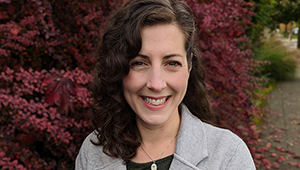
New grant boosts research on cardiovascular disease
Epidemiologist Laura B. Harrington, PhD, MPH, speaks about working in cardiovascular and aging research.
Research to practice

Home blood pressure monitoring: From study to clinic
Beverly Green, MD, and Kaiser Permanente work to improve hypertension care.
Research
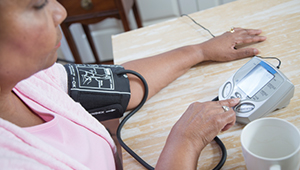
Is blood pressure reading better at home or clinic?
Home blood pressure monitoring shown to be an excellent alternative for making new diagnoses of hypertension.