
Health Informatics

“Our goal is to understand how to make health information technology practical in ways that directly engage patients and providers.”
James D. Ralston, MD, MPH
Kaiser Permanente Washington Health Research Institute Associate Investigator
Washington Permanente Medical Group, Internal Medicine
Research overview
Research on health informatics at Kaiser Permanente Washington focuses on developing and using health information technology (IT) to transform health care delivery. By testing new paradigms of care that provide more opportunities to engage patients, this research is supplying valuable evidence that is helping shape federal policy and guiding innovative redesign of health care.
“We’re working to understand how to make health IT practical so patients and care teams find it useful and engaging,” explained Kaiser Permanente Washington Health Research Institute (KPWHRI) Senior Investigator James Ralston, MD, MPH. “We want to find ways to use information technologies to support patients and providers together, both inside and outside the office.”
Integral to this support is designing technologies that are user-friendly and meet the needs of both patients and providers. By applying human-centered methods that focus on needs, use, and usability, KPWHRI researchers inform the design of health IT with direct participation from users.
Groundbreaking methodological work by KPWHRI health informatics researchers includes developing natural language processing (NLP) to analyze text such as notes and written reports in electronic health records (EHRs). Assistant Investigator David Carrell, PhD, leads in the area of using NLP and machine learning to identify patient phenotypes, or specific health characteristics such as possible heart disease, risk of opioid overdose, or suggestion of colon cancer. This information can assist researchers in studying how genetics and other factors influence disease.
Other examples of KPWHRI health informatics research include projects using EHRs and secure electronic communications such as:
- using a patient-shared EHR to improve care for chronic illnesses such as depression, diabetes, hypertension, and heart disease;
- understanding the effects of technologies such as OpenNotes, which gives patients access to notes that their doctors write during office visits;
- understanding and addressing differences in patient use of online health care services that could lead to disparities in care;
- testing NLP to target mentions of specific words and phrases in EHRs to supplement or replace skilled chart abstraction—providing faster access to “big data” and actionable information about patients who may need follow up.
Examples of KPWHRI research in mobile health (mHealth) and user-centered design include:
- evaluating mHealth smartphone tools: 1) to improve primary care for alcohol use disorders, 2) to support patients after bariatric surgery, and 3) to change smoking behavior;
- the VITAL and Seeing Priorities studies to apply user-centered processes to learn how health care providers can elicit and honor what is most important to patients living with multiple chronic health conditions;
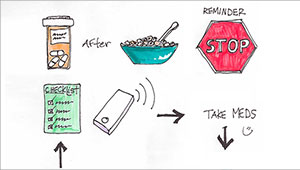
- the REMIND project applying user-centered methods to redesign clinical reminders and notifications for patients with chronic and preventive health care needs;
- the landmark Electronic Communications and Blood Pressure (eBP) study of home blood pressure monitoring and web-based care to increase hypertension control without office visits.
“Our studies on using health IT to improve care are showing that we can achieve better outcomes when we shift care from the doctor’s office to where people live: in their homes—and online,” said Senior Investigator Beverly B. Green, MD, MPH.
Recent publications on Health Informatics
Mangione-Smith R, Robinson JD, Zhou C, Stout JW, Fiks AG, Shalowitz M, Gerber JS, Burges D, Hedrick B, Warren L, Grundmeier RW, Kronman MP, Shone LP, Steffes J, Wright M, Heritage J Fidelity evaluation of the dialogue around respiratory illness treatment (DART) program communication training 2022 Jul;105(7):2611-2616. doi: 10.1016/j.pec.2022.03.011. Epub 2022-03-14. PubMed
Bellows BK, Xu J, Sheppard JP, Schwartz JE, Shimbo D, Muntner P, McManus RJ, Moran AE, Bryant KB, Cohen LP, Bress AP, King JB, Shikany JM, Green BB, Yano Y, Clark D, Zhang Y Predicting Out-of-Office Blood Pressure in a diverse US population 2022 Jun 16;35(6):533-542. doi: 10.1093/ajh/hpac005. Epub 2022-01-18. PubMed
Penfold RB, Carrell DS, Cronkite DJ, Pabiniak C, Dodd T, Glass AM, Johnson E, Thompson E, Arrighi HM, Stang PE Development of a machine learning model to predict mild cognitive impairment using natural language processing in the absence of screening 2022 May 12;22(1):129. doi: 10.1186/s12911-022-01864-z. Epub 2022-05-12. PubMed
Lapham GT, Matson TE, Carrell DS, Bobb JF, Luce C, Oliver MM, Ghitza UE, Hsu C, Browne KC, Binswanger IA, Campbell CI, Saxon AJ, Vandrey R, Schauer GL, Pacula RL, Horberg MA, Bailey SR, McClure EA, Bradley KA Comparison of Medical Cannabis Use Reported on a Confidential Survey vs Documented in the Electronic Health Record Among Primary Care Patients 2022 May 2;5(5):e2211677. doi: 10.1001/jamanetworkopen.2022.11677. Epub 2022-05-02. PubMed
Roldán-Majewski C, Broedel E, von Korff M, Rammelsberg P, Schindler HJ, Giannakopoulos NN Diagnostic accuracy of the PEG scale, a three-item questionnaire for grading the impact of orofacial pain-related dysfunction 2022 Apr;163(4):e540-e546. doi: 10.1097/j.pain.0000000000002406. Epub 2021-07-14. PubMed
Researchers in Health Informatics
 Claire Allen, MPHManager, Collaborative Science |
 Katharine A. Bradley, MD, MPHSenior Investigator |
 Yates Coley, PhDAssociate Biostatistics Investigator |
 Beverly B. Green, MD, MPHSenior Investigator |
 Annie Hoopes, MD, MPHAssistant Investigator |
 Paula Lozano, MD, MPHSenior Investigator; Director, ACT Center |
 James D. Ralston, MD, MPHSenior Investigator |
 Brian D. Williamson, PhDAssociate Biostatistics Investigator |

New findings

Research roundup on natural language processing and machine learning
Using doctor's notes to learn about drug reactions, dementia, and cannabis use.
Open notes

Concerns about note-sharing fade with practice
A new federal rule requiring physicians to give patients access to their notes may be easier to follow than physicians expected.
VITAL Study
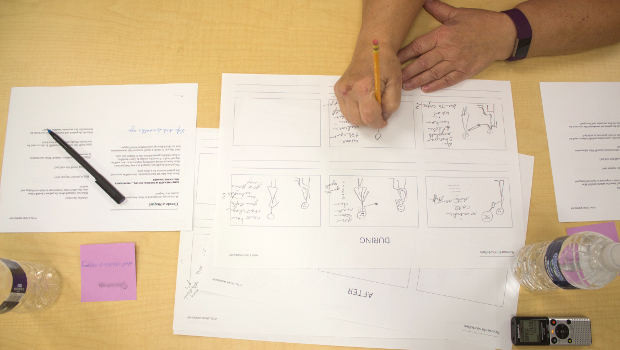
The Valuing Important Things in Active Lives (VITAL) study is a three-year project funded by the Agency for Healthcare Research and quality.
Learn about the VITAL study.
Studying patient reminders
REMIND study
The REMIND study is a three-year project to redesign reminders and notifications for patients with chronic and preventive health care needs.
KPWHRI In the Media
Simpler models for predicting suicide risk work comparably to more complex ones
For effective AI, keep it simple
Politico Future Pulse, March 28, 2023
Notes from Eric

The common goal of precision medicine and public health
Dr. Eric B. Larson draws ideas from The Lancet, JAMA, and Science to explain why population-based medicine is personalized medicine.
Read it in Healthy Findings.
healthy findings blog

The Weeds has health IT questions, we have answers
On a recent podcast from Vox, health policy commentators wondered why U.S. health IT isn’t better. Dr. James Ralston responds.
Read it in Healthy Findings.