Get to know SONNET
Kaiser Permanente's Social Needs Network for Evaluation and Translation (SONNET)
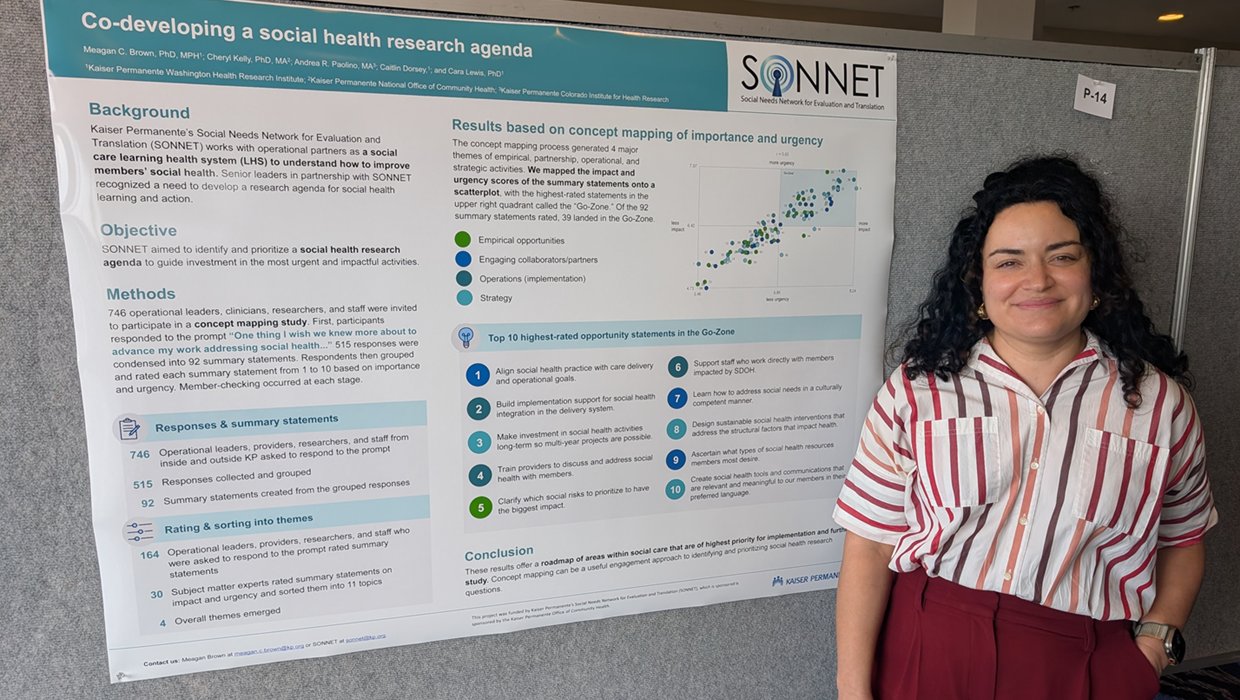
Meagan Brown presents on Kaiser Permanente’s social health research agenda at the 2025 Social Interventions Research & Evaluation Network (SIREN) research meeting
How SONNET leverages Kaiser Permanente's research capabilities to help address members' social needs
By SONNET Director Meagan Brown, PhD, MPH, an assistant investigator at Kaiser Permanente Washington Health Research Institute (KPWHRI)
For the past several years, I’ve had the pleasure of leading exciting work in social needs research and evaluation through Kaiser Permanente's Social Needs Network for Evaluation and Translation (SONNET). Established in 2017 by the Office of Community and Social Health, SONNET helps advance Kaiser Permanente’s Social Health Practice (SHP) objectives by tapping into enterprise-wide research capabilities to inform regional and systemwide efforts to assist members who want help with social needs.
SONNET brings together Kaiser Permanente researchers and operational leaders from Community and Social Health and the organization’s 8 regional markets via a coordinating center housed at Kaiser Permanente Washington Health Research Institute (KPWHRI). Working together, we help address our members’ social needs by designing, evaluating, and implementing screening methods that identify social needs, as well as interventions that help resolve them.
What we learned from SONNET's early work
Much of SONNET’s early work was focused on identifying operational leaders’ top priorities for learning and action and helping SHP leaders understand the prevalence and types of social needs among Kaiser Permanente members nationwide. Among my first SONNET projects were Kaiser Permanente’s National Social Health Survey in 2020 and 2022, which assessed the social needs of thousands of adult members in all 8 Kaiser Permanente markets. Both surveys indicated a high prevalence of social needs among members nationwide — with 2022 results showing that:
- More than 2 in 3 members (68%) have at least 1 social need, and 90% of members with Medicaid plans have at least 1 social need.
- Members with any social need are 6 times more likely to report fair or poor mental/emotional health and 3 times more likely to report fair or poor physical health.
- 61% of members with social needs are interested in receiving assistance from Kaiser Permanente.
In intersectional analyses of the 2020 survey results, we also examined how the overlapping social identities of age, income, gender, and race and ethnicity are associated with social need — finding that needs are higher among specific intersectional groups, especially lower-income, older-age adults who are Black, Pacific Islander, or multi-racial. This points to the importance of investing not just in social needs screening but also in upstream changes to improve the social safety net and advance policies to reduce racial and economic inequities.
Creating this vast, representative data resource has also allowed SONNET to examine links between social needs and important outcomes, such as member health and health care costs and utilization. Our most recent findings showed that people who report social needs are 21% more likely to visit the emergency department. In another recent analysis, we found that people who experience severe housing instability are nearly twice as likely to have severe obesity — independent of age, sex, race and ethnicity, socioeconomic factors, and health status.
What SONNET is focusing on now
With a better understanding of members’ social needs nationwide, SONNET pivoted in 2025 to focus our scientific capabilities on evaluations to inform Kaiser Permanente’s efforts to improve services offered in its Community Support Hub. Our initial focus is understanding the experiences of members who use the Hub's Call Center, which provides access to community support hub specialists who help connect members to resources for addressing their social needs.
Throughout 2025, we worked with SHP leaders and teams to leverage existing data and conduct meaningful analyses that shed light on how members engage with and move through the Call Center. Together, we:
- Built new data infrastructure linking multiple sources of member data and analyzed these robust new datasets.
- Identified and regional, line of business, and demographic variations in Call Center referral patterns and receipt of services.
- Finalized a set of short-term members outcomes that are measurable, actionable, and aligned with SHP priorities, such as missed appointments and member satisfaction.
Now, as the year comes to a close, we're using these results to develop personas based on member characteristics that predict Call Center engagement. Our early findings from the evaluation (summarized in our 2025 annual report) point to areas where we are doing well at reaching members — and to other areas where we have opportunities to boost Call Center outreach and engagement, improve data collection, and better understand what happens when members seek resources in their communities. Looking ahead to 2026, we are excited to dive deeper into these initial results to continue helping more members with social needs to find the support that they need. Our work to date reminds us that behind every data point is a person navigating real challenges, and that our role is to make those pathways as clear and supportive as we can.
This content was adapted from a story originally published by the Center for Accelerating Care Transformation (ACT Center) at Kaiser Permanente Washington.
Learn more
Related news
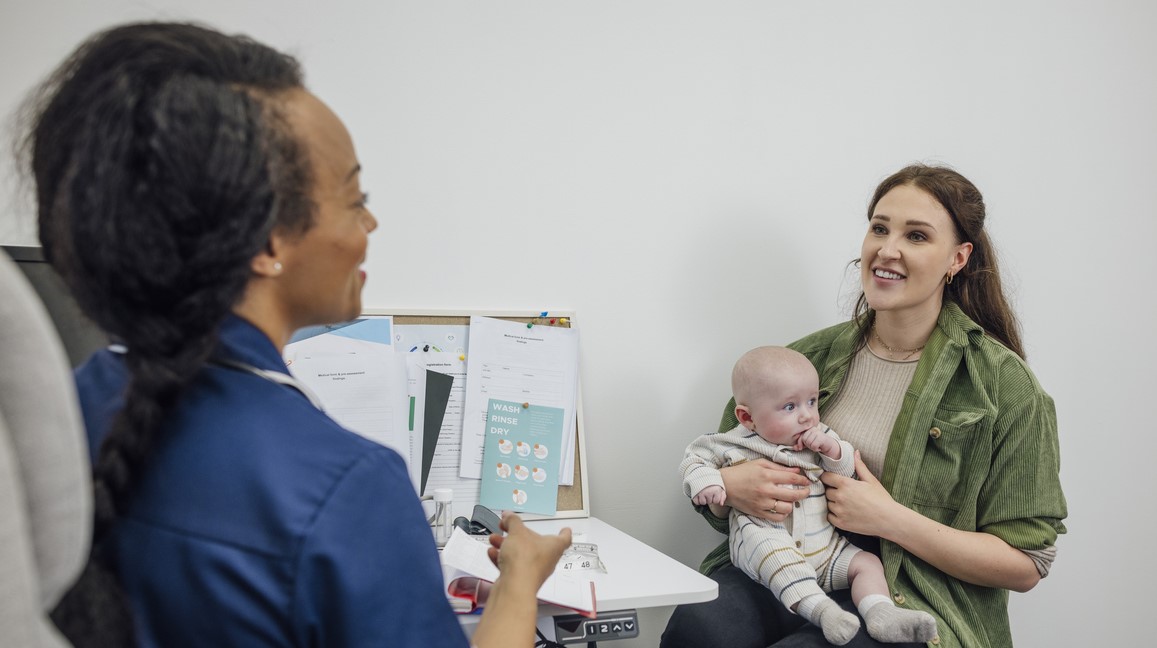
Integrating social health into primary care
New research from Kaiser Permanente Washington provides insights on screening members for social needs and connecting them to social services
Contact us
Email the SONNET team anytime at sonnet@kp.org.