
Social health news from KP Washington
Integrating social health into primary care
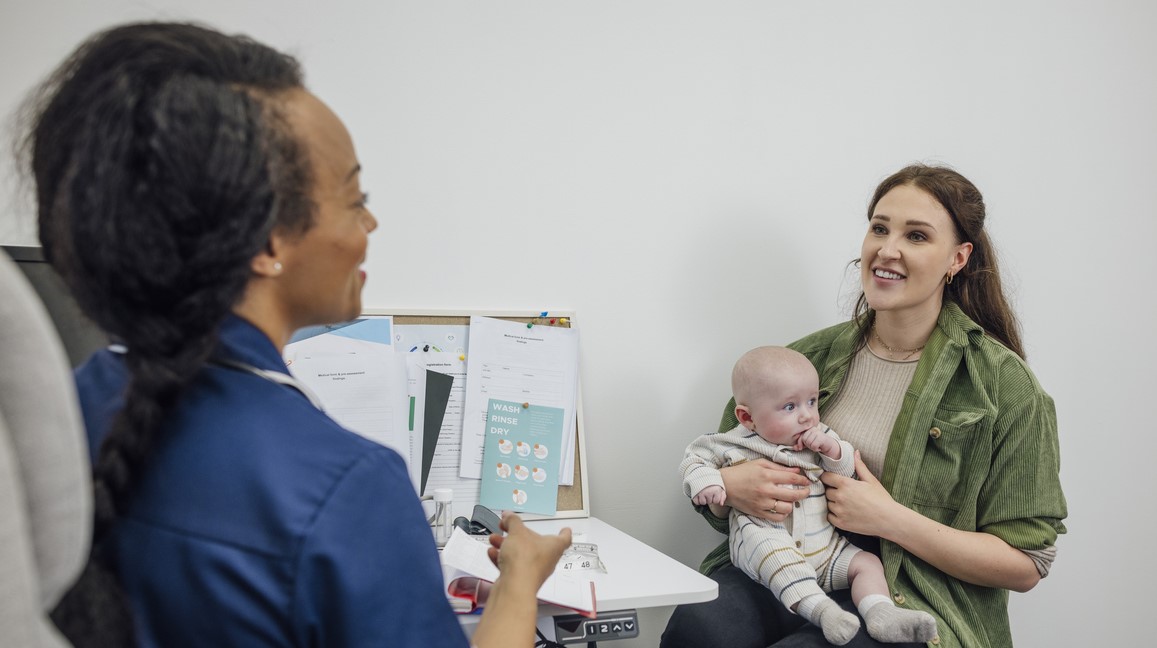
Recent publications from Kaiser Permanente Washington provide insights on social needs screening and helping members connect to social services
While social health integration is a promising strategy for improving total health, little scientific evidence exists to guide important decisions about implementation. What's the best way to reliably identify people who want help with social needs in a respectful and patient-centered way? And what strategies work well to efficiently and effectively connect them to resources that can help resolve those needs? Three recent publications from Kaiser Permanente Washington provide insights from the region's primary-care based Social Health Integration (SHI) pilot — including results related to cost and health care utilization and themes that emerged from member interviews.
Launched in 2021, the SHI pilot was led by researchers from Kaiser Permanente Washington's Center for Accelerating Care Transformation, including Meagan Brown, PhD, MPH, director of Kaiser Permanente's Social Needs Network for Evaluation and Translation (SONNET). The research team partnered with primary care leaders, providers, and members to design, implement, and evaluate an approach to universal social needs screening at 2 medical centers. After screening, members who wanted help with social needs received a referral to 1 of 2 social health assistance programs: the local Community Resource Specialist (CRS) service or Kaiser Permanente’s Community Support Hub Call Center.
Two recent publications from the SHI pilot focus on how referring members to these programs might impact health care utilization and costs — questions of great interest to health care organizations that are aiming to integrate social health while also facing resource constraints. Published in AJPM Focus, the first paper shares results on differences in utilization between patients who were in the CRS group and those who were in the Call Center group. The findings showed that CRS participants had slightly more primary care and specialty care encounters over the 9-month evaluation period.
Similarly, the cost analysis published in BMC Health Services Research showed slightly higher costs for CRS participants compared to Call Center participants. In both cases, the authors concluded that this is likely because local, clinic-based programs like the CRS service may be better integrated with care teams to provide ongoing support for patients’ health care needs and may increase patient engagement with the health system.
“Clinic-based social health support for patients with social needs can help them prioritize and access preventive care services,” said Ammarah Mahmud, PhD, MPH, the lead author on both papers. “Our short time frame didn’t allow us to evaluate long-term impacts on avoidable utilization and costs related to emergency care or hospital admissions. Future research over a longer period will shed more light on these outcomes and help health systems better understand what to expect from social health integration over time.”
A closer look at the impact of social health integration on members
Importantly, the SHI pilot also included a qualitative analysis based on interviews with 50 members who participated in either the CRS or Call Center programs. Published in BMC Health Services Research in October, these findings provide insights to help guide future social health integration efforts. Here are a few examples of key themes that emerged.
Availability and eligibility obstacles: Few patients reported successfully connecting to community resources even after working with the CRS or the Call Center. Many patients said that the services they needed were either not available in their community or they were not eligible for the services that exist.
 "The few things that I thought I potentially was going to find were very inadequate for my needs. … You have to go through a whole application process and then get approved and then you have to be within boundaries and this and that, or [apply at] certain times and dates."
Mismatch between patient needs and the CRS and Call Center services: Some patients with complex social needs were frustrated by the level of support provided, which was limited to brief conversations with a CRS or Call Center representative who provided information about potentially available resources. Others said they would prefer that the health system offer social health services more directly or take action to reduce their health care expenses.
"What would have been helpful would be things that people really need, like food, their water bill, like their gas bill, their electricity bill, help with their roof. When you’re living off nothing, there’s no way you can save anything to be able to pay for that.”
Regardless of resource referrals, emotional support is meaningful: Many patients who did not get connected to resources still found working with the CRS or the Call Center to be valuable. They especially appreciated the holistic approach to care and the knowledge that they can call someone if they need help. Several expressed that this deepened their appreciation for Kaiser Permanente and showed that the organization cared about them as a whole person.
"Even though I didn’t necessarily think I was going to get any assistance … I was interested that it was an option and that Kaiser cared enough to have someone who was a resource specialist who would reach out and work personally with families.”
Lead author Ariel Singer, MPH, noted the importance of this benefit despite the small number of patients who were successfully connected to social services. “Even though the need for services is greater than the supply, many patients value emotional support from their health care provider as they cope with stressful social circumstances,” she said. “Despite the competing priorities, financial pressures, and other complexities health care organizations face with social health integration, they may be able to ease the burden for some patients through the power of caring conversations alone.”
Kaiser Permanente Washington's work to integrate social health in primary care continues, with nearly 30% of members getting screened for social needs in 2025. Members who request help with employment, childcare, utilities, or internet access are referred to Community Support Hub Call Center, while members with all other resources needs are directed to the local CRS team.
The SHI pilot was funded primarily by Kaiser Permanente Washington's Learning Health System Program, with additional funding from the Kaiser Permanente Office of Community and Social Health.
Read the papers:
- Differences in healthcare utilization across 2 social health support modalities: Results from a randomized pilot evaluation, published in AJPM Focus.
- Differences in health care costs between two social health support programs: findings from a randomized social health integration pilot program, published in BMC Health Services Research.
- “It doesn’t feel as much like my downfall for needing help”: patient perspectives on pathways for improving health through social health integration, published in BMC Health Services Research.
By Jessica Ridpath
This content was adapted from a story originally published by the Center for Accelerating Care Transformation (ACT Center) at Kaiser Permanente Washington.

Learn more
Related news
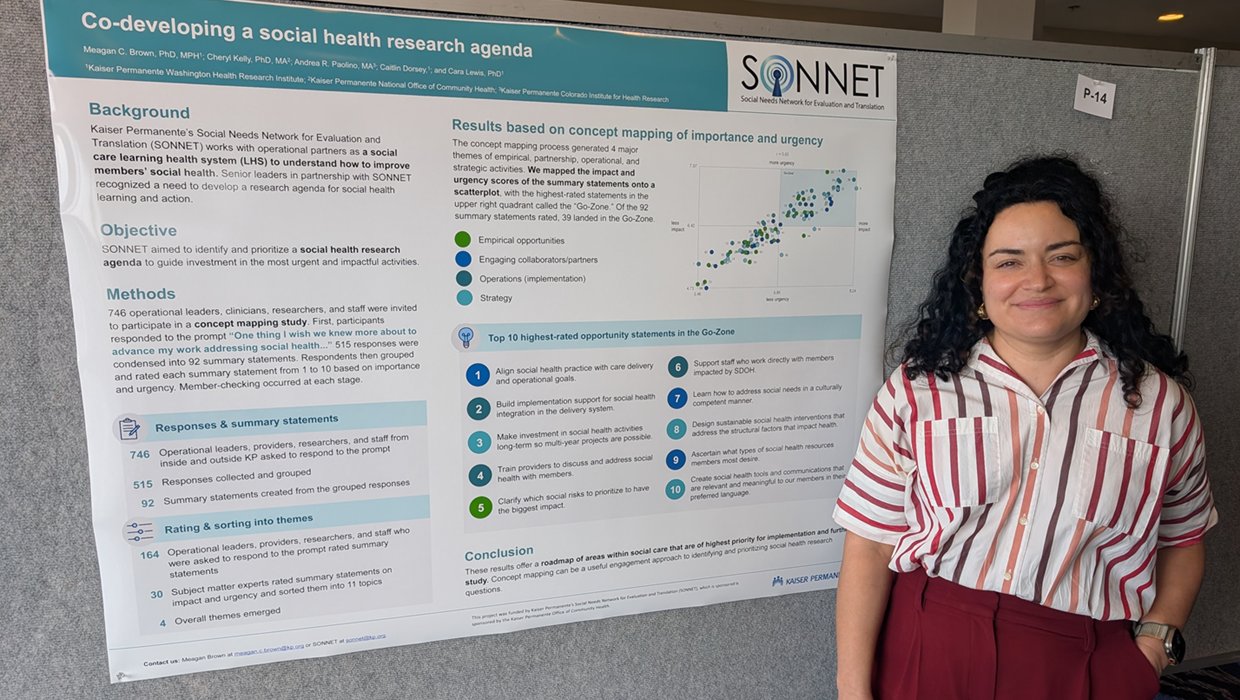
Get to know SONNET
How Kaiser Permanente's Social Needs Network for Evaluation and Translation (SONNET) leverages research capabilities to advance social health
Contact us
Email the SONNET team anytime at sonnet@kp.org.